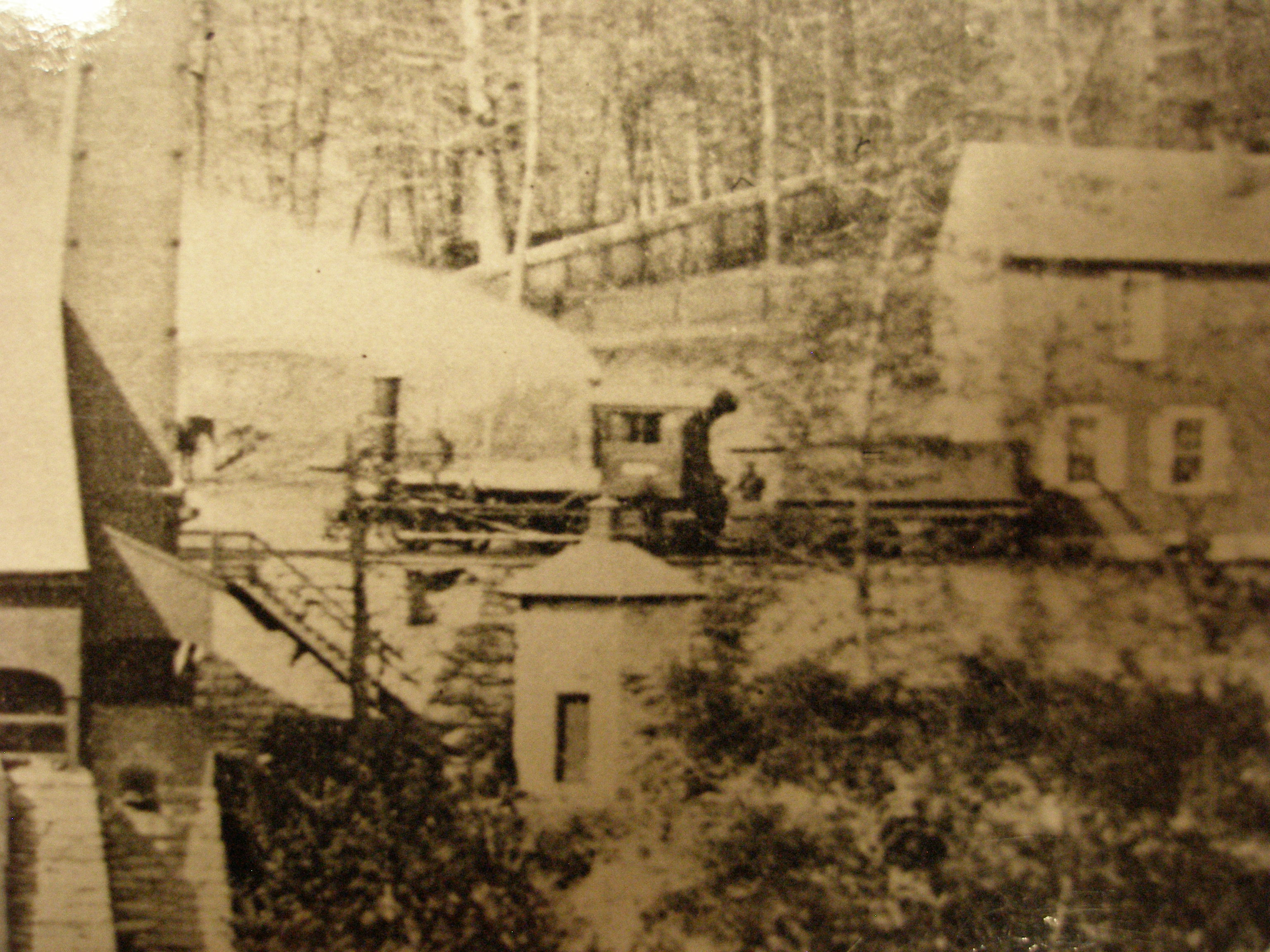
This photo, taken at Anthracite Furnace, is believed to be the North Lebanon RR / Cornwall Railroad's first locomotive the Kittatinny. The photo is of the right era and the locomotive pictured appears to be a 0-8-0 flexible beam Baldwin. Records show that the Kittatinny was a Baldwin 0-8-0, built circa 1854-6. The North Lebanon / Cornwall RR is also said to have had another Baldwin (a 0-6-0 though) built around this time that was called the Cornwall (the first of two such named locomotives).
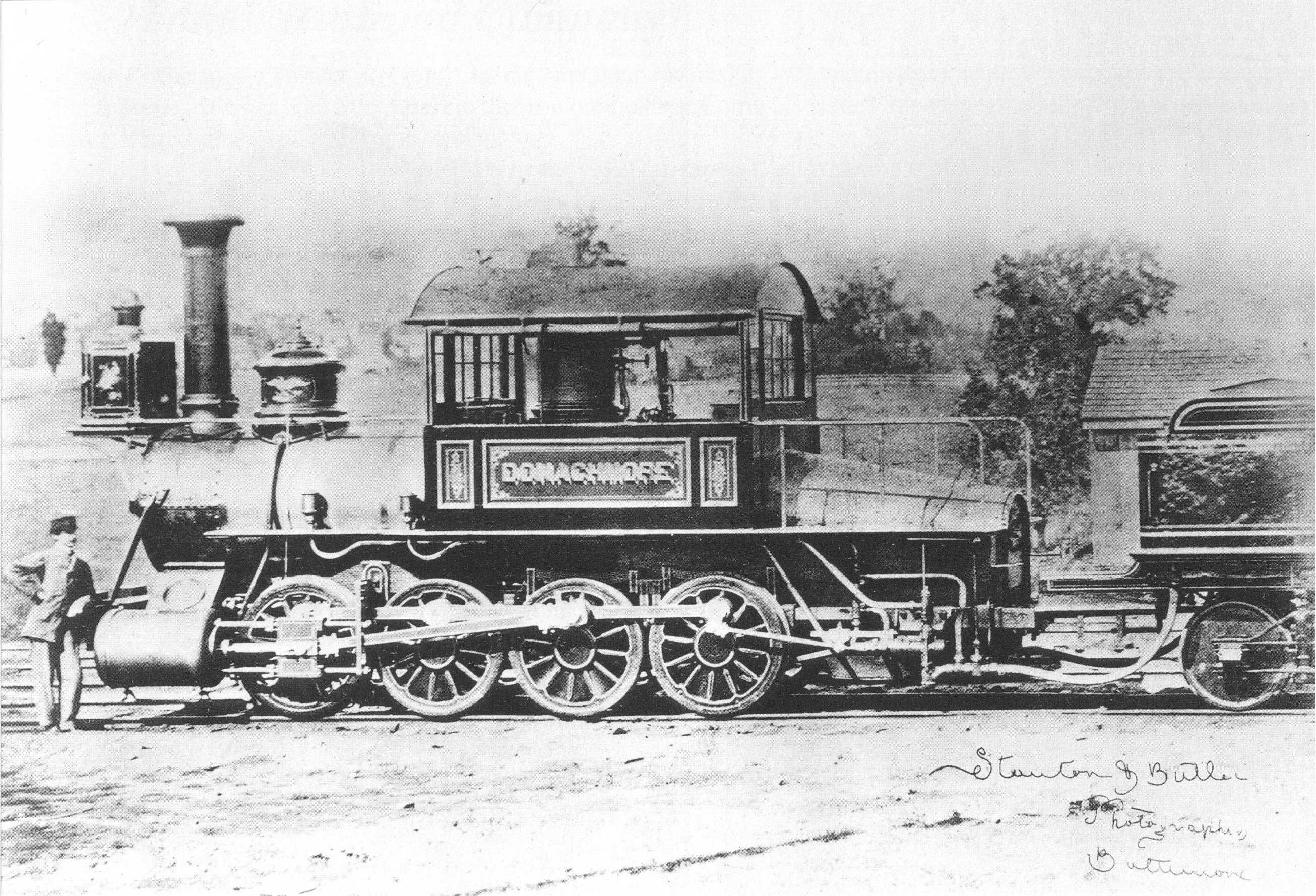
According to newly discovered information, the North Lebanon RR / Cornwall RR's Donaghmore (the first one) was built 1866-7 by the Baltimore Locomotive Works. This company took over the famous locomotive works originally run by Ross Winian but only made a handful of locomotives before moving onto other manufacturing ventures.
 C.jpg)
This is currently the only known photo of the Cornwall Railroad's Speedwell. She was a Baldwin built in 1872. This photo taken at Penryn Park shows that she was a wood burner (at least originally). Note the link and pin couplers.
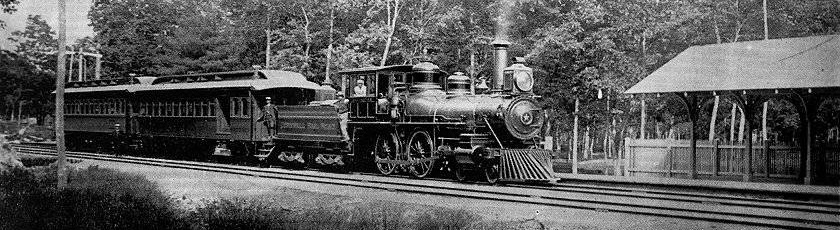
This beautiful classic 4-4-0 was built by Baldwin in 1885 for the Cornwall Railroad's passenger service and named the Penryn, after Penryn Park, a popular pinic area along the Cornwall RR. She was eventually numbered 1 and at some point later in life recieved a new boiler and tender.
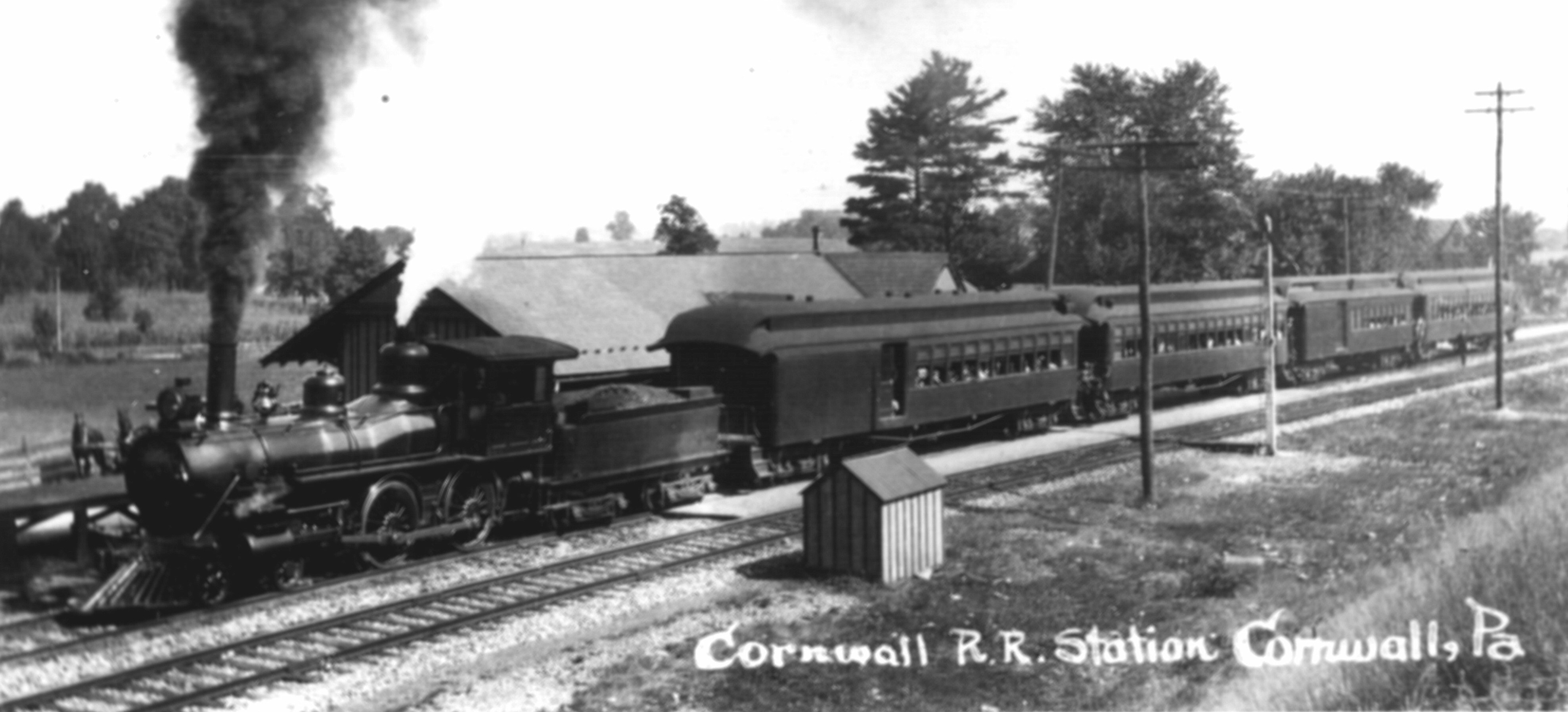
The sister to the Penryn, the Castle Finn, later #2 was built in 1884 by Baldwin also for passenger service. Later in life she was heavily modifeid with a new boiler, cab, and tender. In 1929, she pulled the last scheduled passenger train on the Cornwall RR.

The Hopewell was constructed in 1890 by Baldwin and later on was numbered 3. She is seen here at the yard office in Lebanon circa 1910.
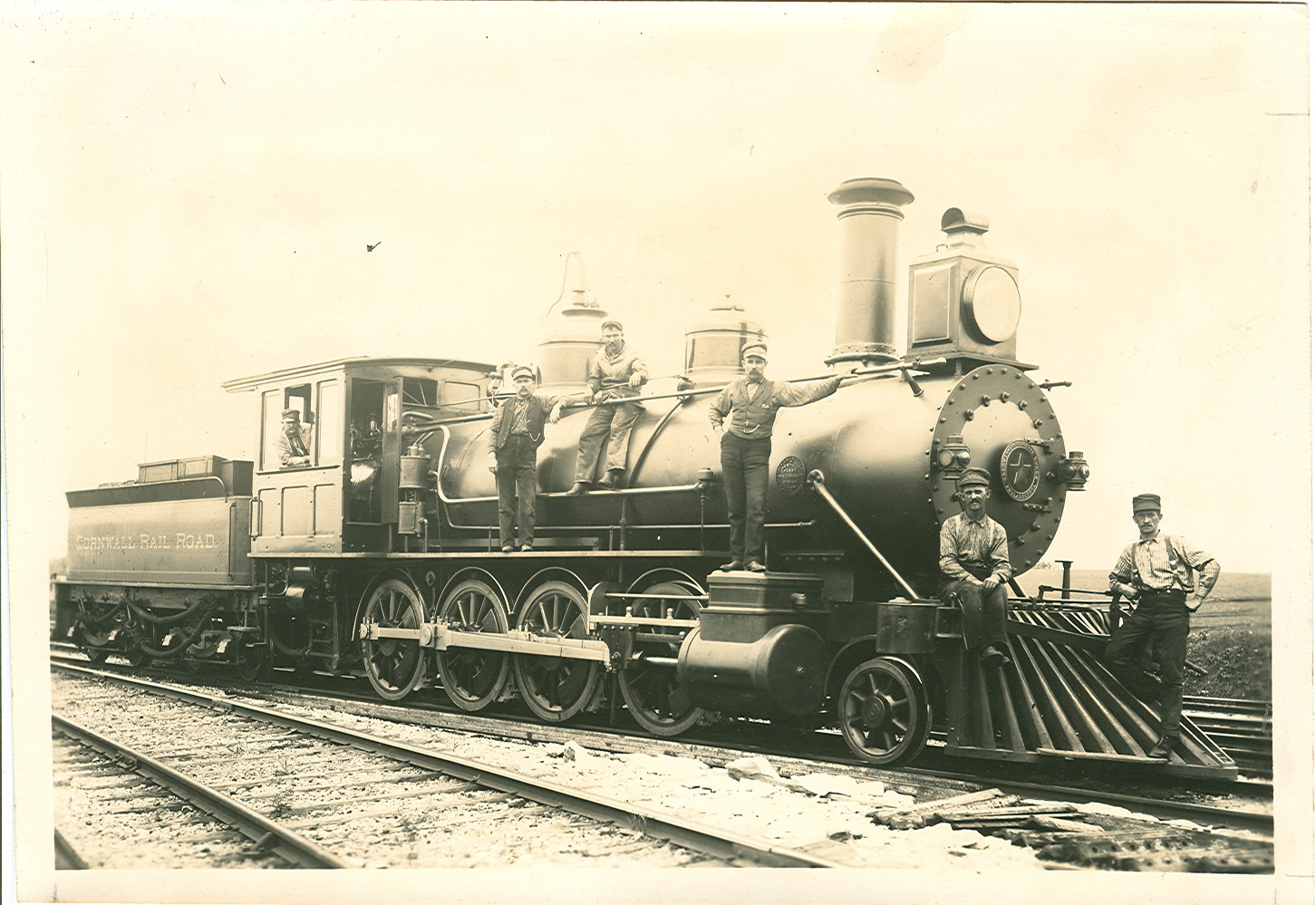
This early shot of the Donegal shows it nearly, if not brand new from Baldwin. She was built in 1888 and later numbered 5. The Cornwall also had another 2-8-0 virtually identical but built four years earlier in 1884, also by Baldwin, named the Saranac (later #4).
The Lebanon Daily news in July of 1884 refered to the Saranac as a "jumbo locomotive," being "several tons heavier than any other in the state and will be the heaviest bult by the works (Baldwin)." When she was delivered that month she was "taken over the Cornwall road with 50 loaded and 50 empty ore cars on a trial trip and gave complete satisfaction." It is interesting to see how this 65 ton (in working order) locomotive was considered to be so large at the time when you compare it to today's typical diesel-electric road engine that weighs in at 205 - 216 tons.
The Donegal was scrapped in 1924 and as visible in a 1923 photo, underwent very little visible modification over the years. It is not known when her sister the Saranac was retired or how much she had been modified by that date.
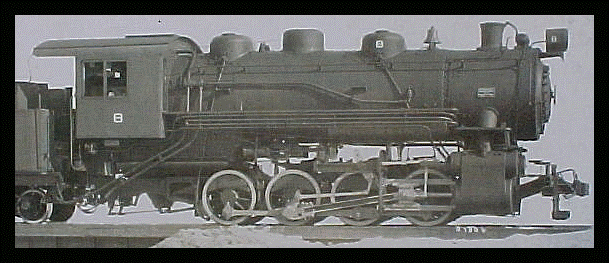
The #8 was constructed in 1920 by Baldwin for the Cornwall Railroad. She was the first of several brand new locomotives the Cornwall bought to replace its aging roster. #9 was built at virtually the same time as the #8, having the next consecutive serial number. The #9 was rather similar in overall appearence except she had significantly larger drivers and had a pair of pilot wheels. #8 most likely would have primiarly performed switching work where as the #9 and the #15 were used mostly to haul raw ore out off Cornwall to be processed at the Lebanon concentrator.
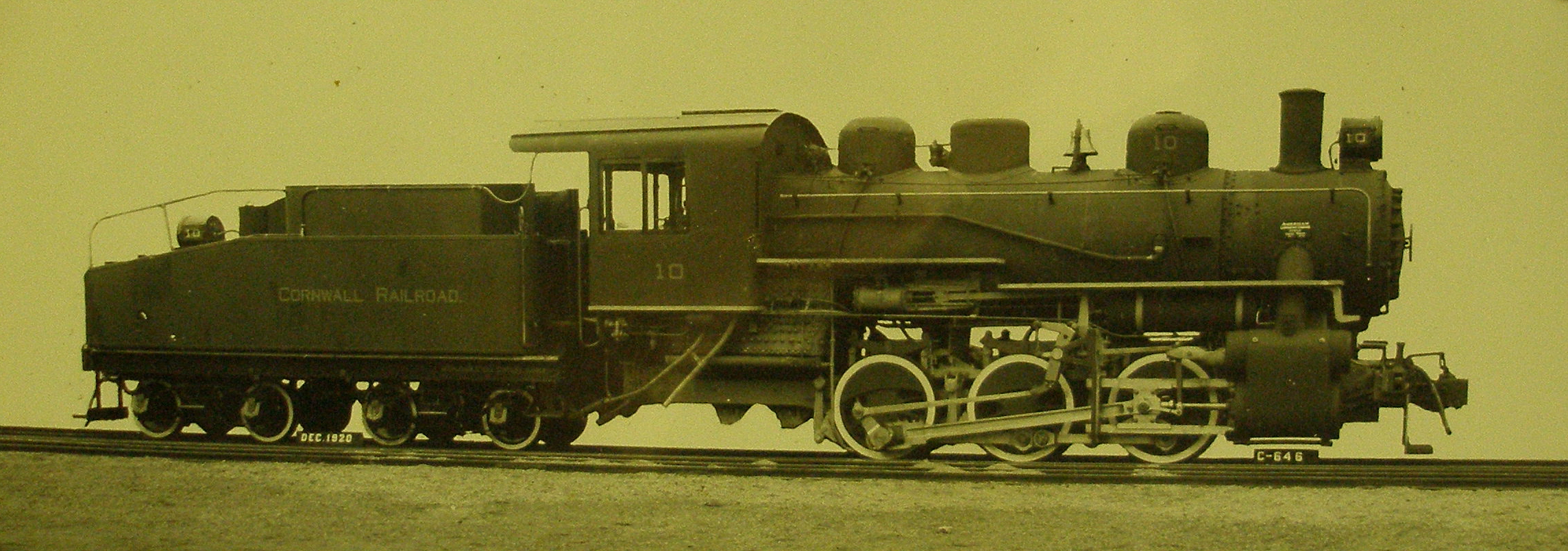
The #10 (pictured) and her sister #11 were built in 1920 by Alco for the Cornwall Railroad. These engines were also consecuatively serial numbered.
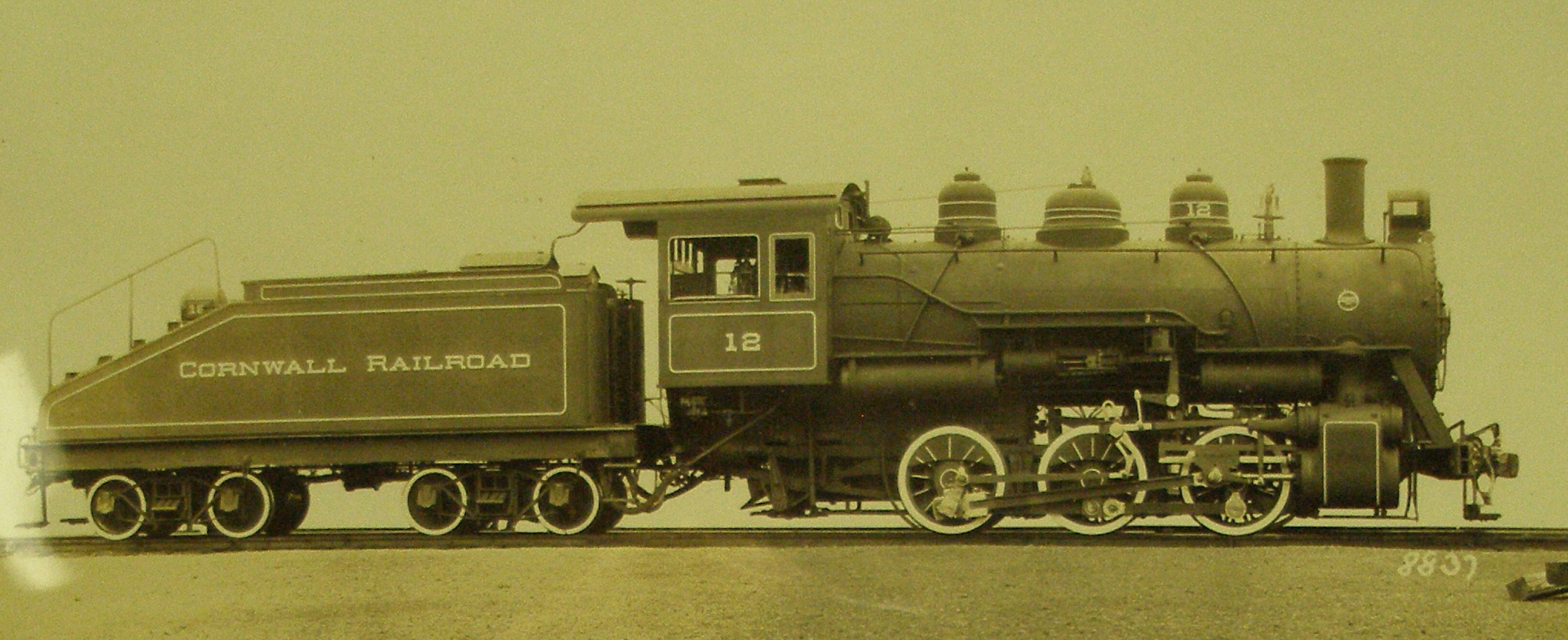
In 1923, the Cornwall ordered the #12 and her sister #13 from Baldwin.
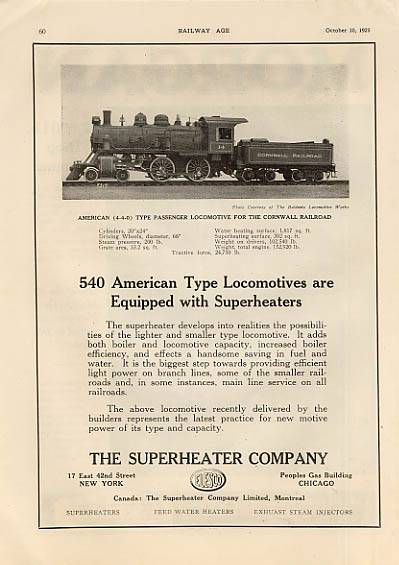
The above ad from the "Railway Age" is for superheaters used in engines including the Cornwall's 14 as pictured. The #14, was built new for the Cornwall by Baldwin in 1924. It is rather odd that the Cornwall RR decided to purchase this engine in addition to two brand new passenger cars around the same time as passenger service was already well on the decline. In January 1929, scheduled passenger service stopped and it is said the #14 was tried as a freight engine but was not successful and sold.
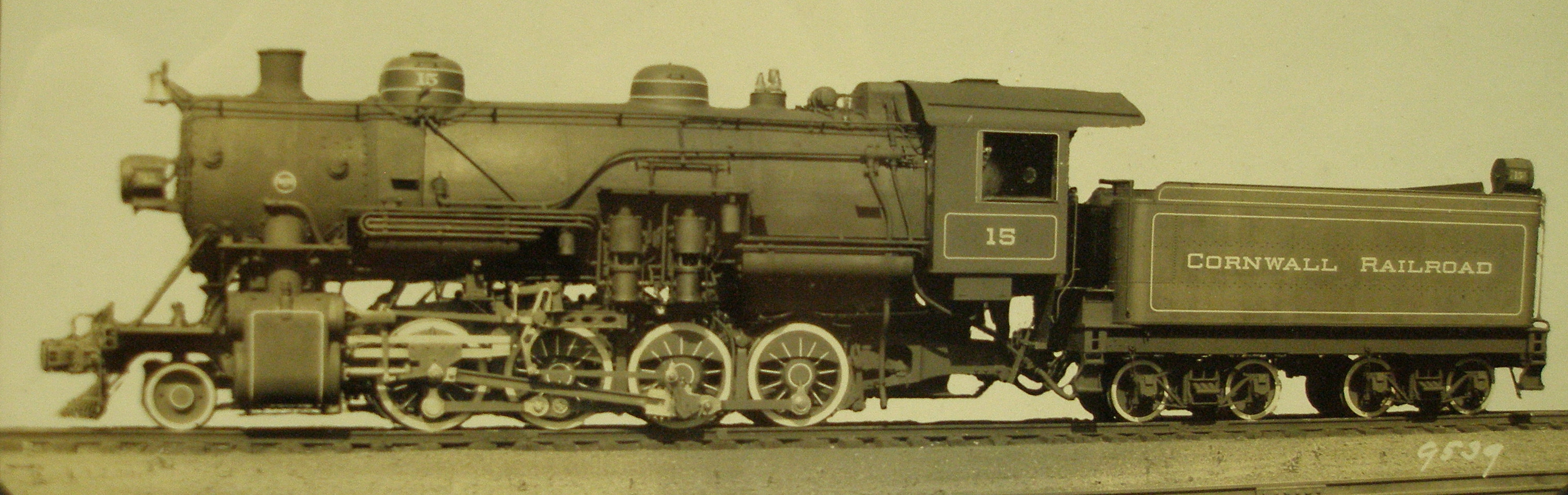
The #15, built by Baldwin in 1925, was the Cornwall's other third generation big road engine. She lasted until the retirement of all steam on the Cornwall Railroad in 1950 and was scrapped the year after.
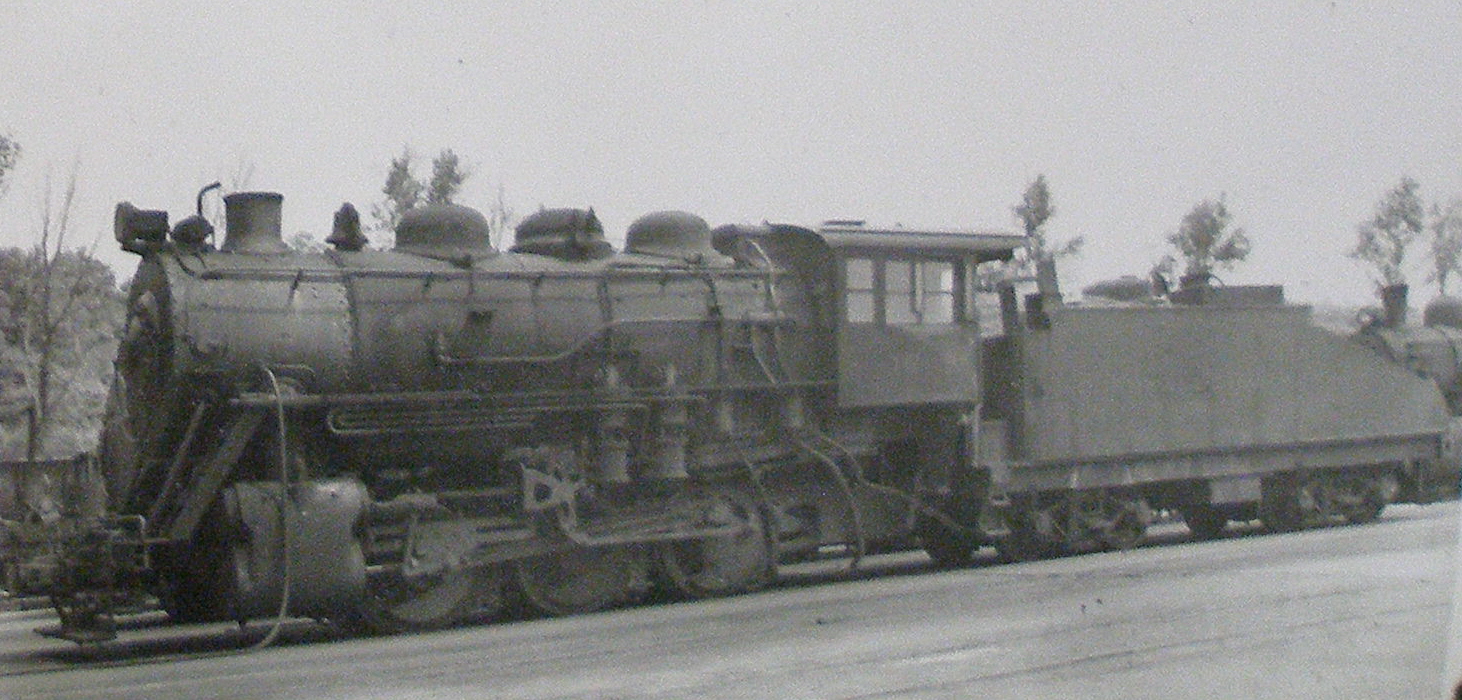
In 1930, Baldwin built this rather chunky switch engine, the #16. She is belived to have been built new for the Cornwall Railroad and if so, would be the last new steamer built for the Cornwall. In 1940, the Cornwall Railroad received the #17 from its parent railroad the Philidelphia Bethlehem & New England. The #17 was similar to the #8 and was the last steamer the Cornwall received.