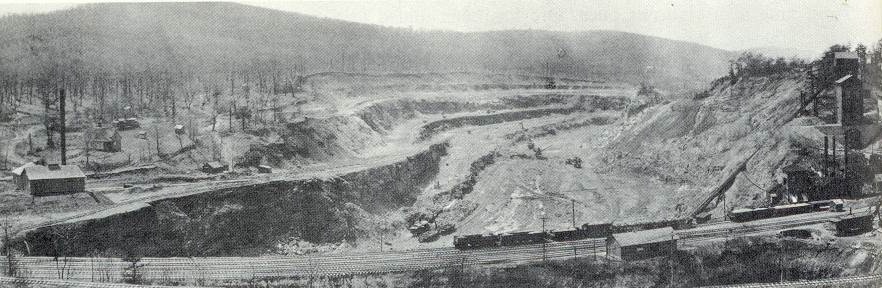
This prototype photo was taken in 1913 and is from the same general angle that visitors view the layout from. The large open pit is the ore mine with the Cornwall Railroad's tracks visible at the very bottom edge of the photo. The layout includes all three rail lines in the area: the Cornwall Railroad, the Cornwall & Lebanon Railroad, and the Cornwall Ore Banks. All trackage has been replicated as best as possible but only the Cornwall Railroad's trackage is operatable on the model.
In 2006, the author of this website was working for the Cornwall Iron Furnace part time over the summer during his college years. It was not long until the staff found out he studied the history of the Cornwall Railroad in addition to the local mining and iron industries. They approached him with the idea of creating a model railroad of the local area - how could that be turned down!?
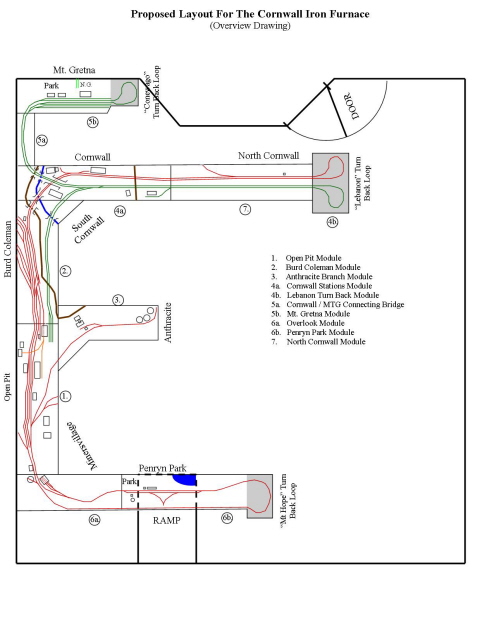
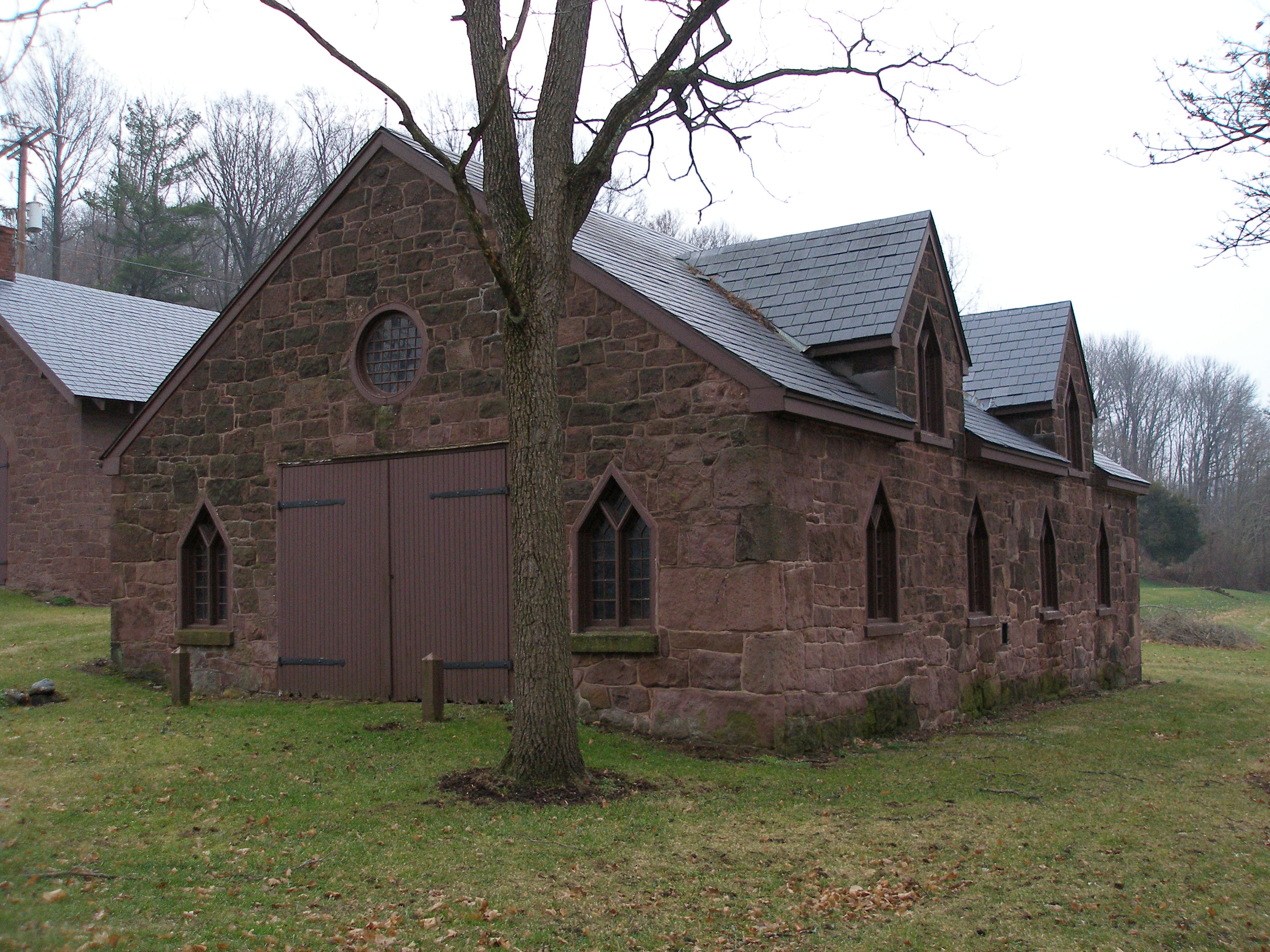
The "grand plan" was made to fit inside the above building - the former blacksmith shop on site. Intially when the layout constuction was started, it began down the hill from it at the visitor center and former charcoal barn. After the summer of 2007, the layout was moved to the blacksmith shop.

Here is an early shot of the layout under construction. The summer of 2006 was spent planning the layout with a fifteen page proposal created and submitted to the Cornwall Iron Furnace Associates - the friends group of the furnace that donated the inital several hundred dollars to get the project started. The summer of 2007 was the primary construction of phase one. In this shot, the benchwork was already constructed and the basic landforms and some of the mock up buildings have already been created.
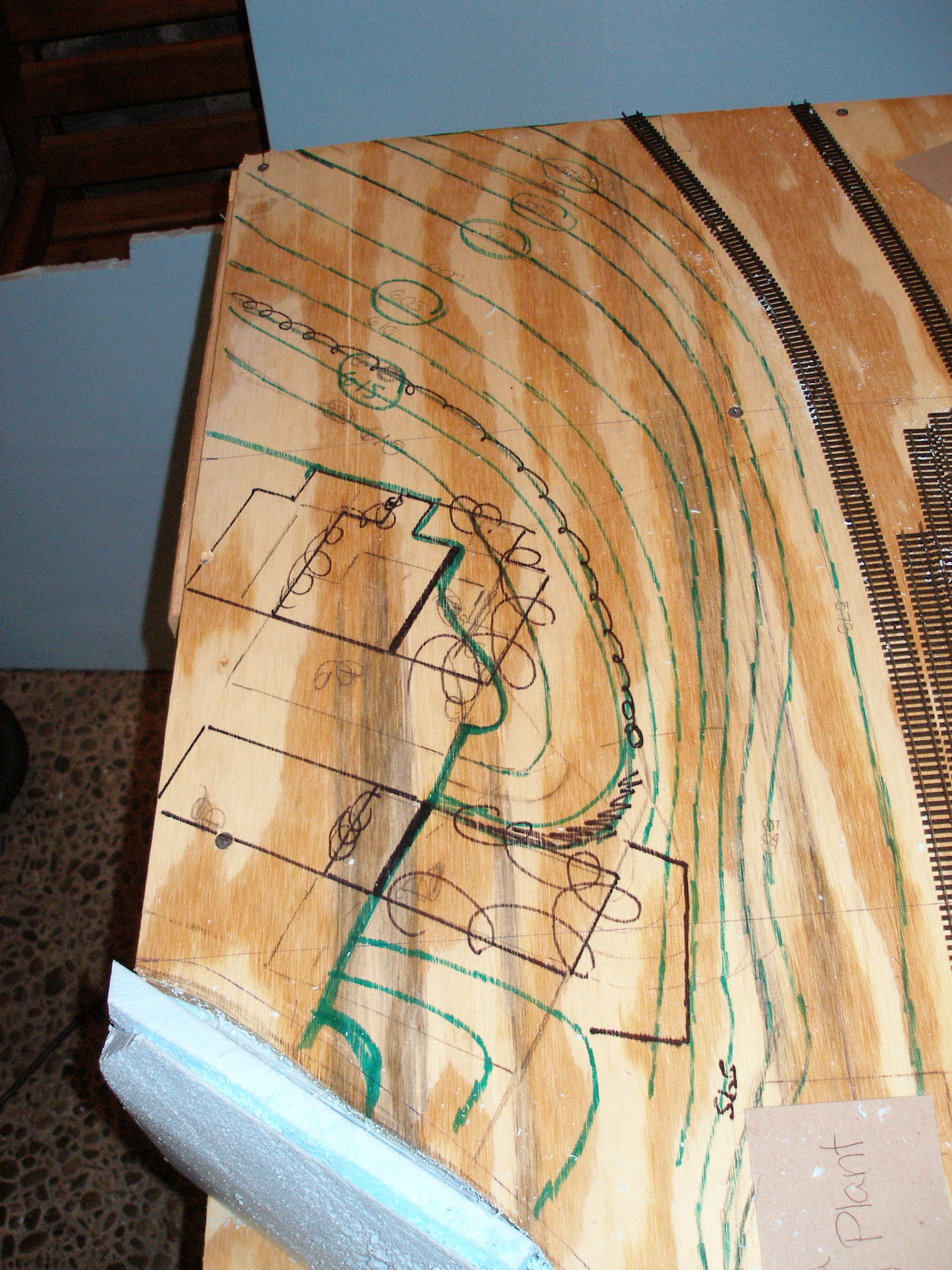
Great care was taken to accurately build the layout. Although the open pit section was selectively compressed to about 80% (often a necessary evil in model railroading in order to fit everything in), topographical maps and track charts of the time were utiilized as much as possible, with historic photos being the other main source of information. Here you can see the topographical lines physically drawn on the layout to get the hill right...
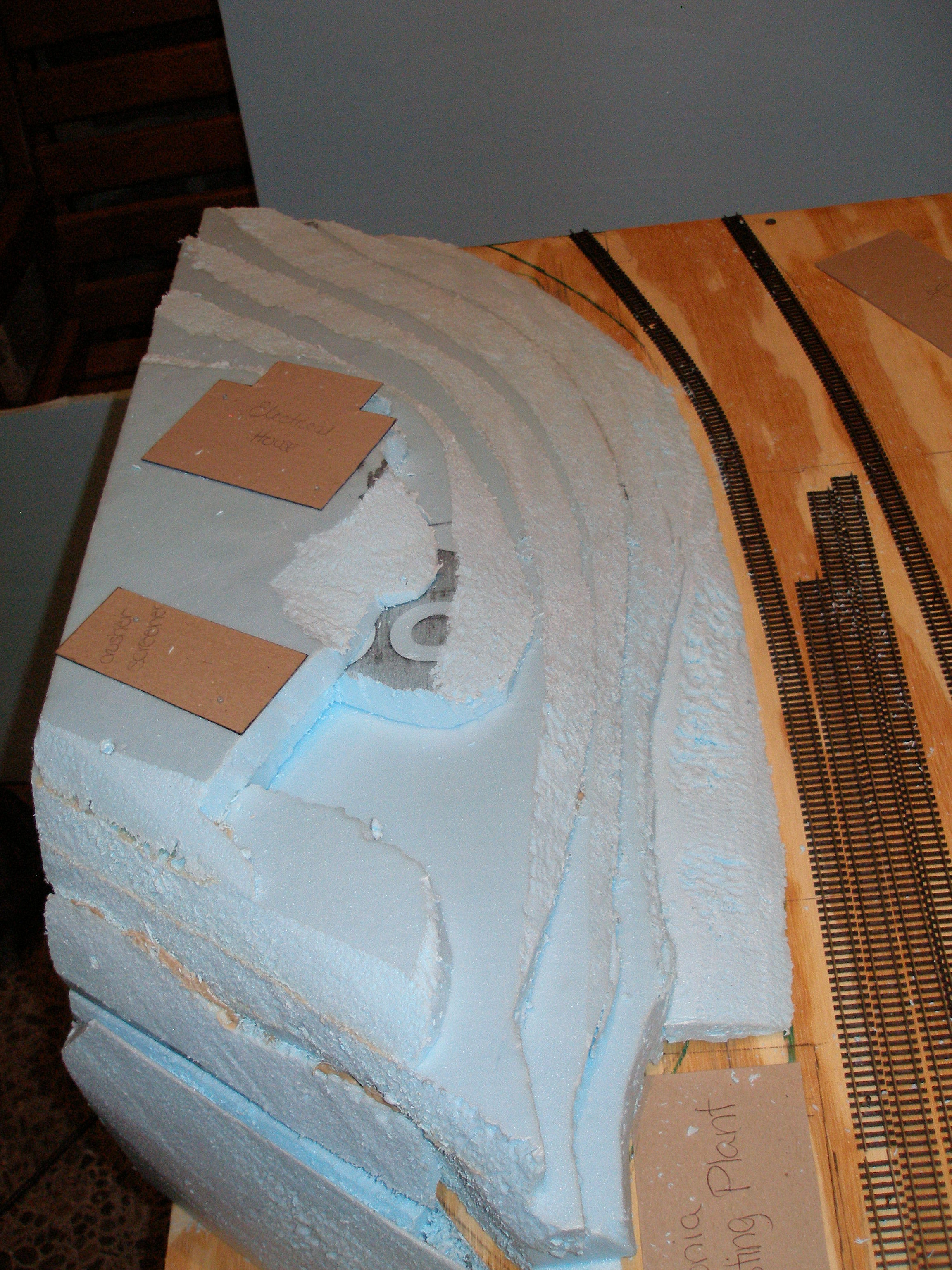
....And another shot of that same part of the layout with the hill having been carved out of blue insulation foam.
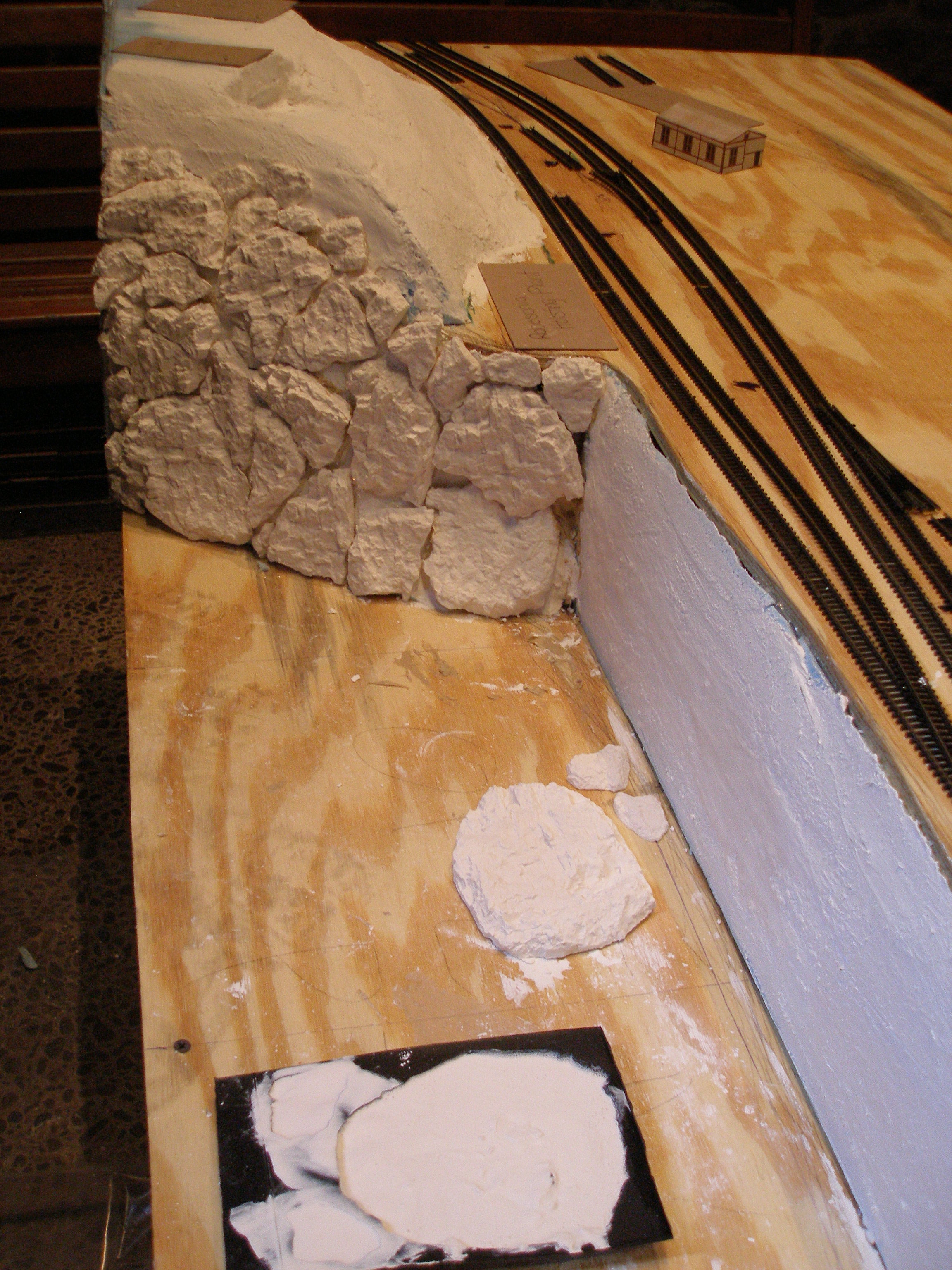
Rockwork was a very labor intensive part of the layout. Much of the layout was comprised of plaster cast "rock" faces as much bare rock was present in real life due to the mining. At the bottom of the photo you can see plaster setting in a mold, with just above that being a couple of just cast rock faces, and finally at the top of the photo, the side of the pit receives rockwork. Only one rock mold was used - casting were broken apart and spun around different angles to prevent patterns being recognized.
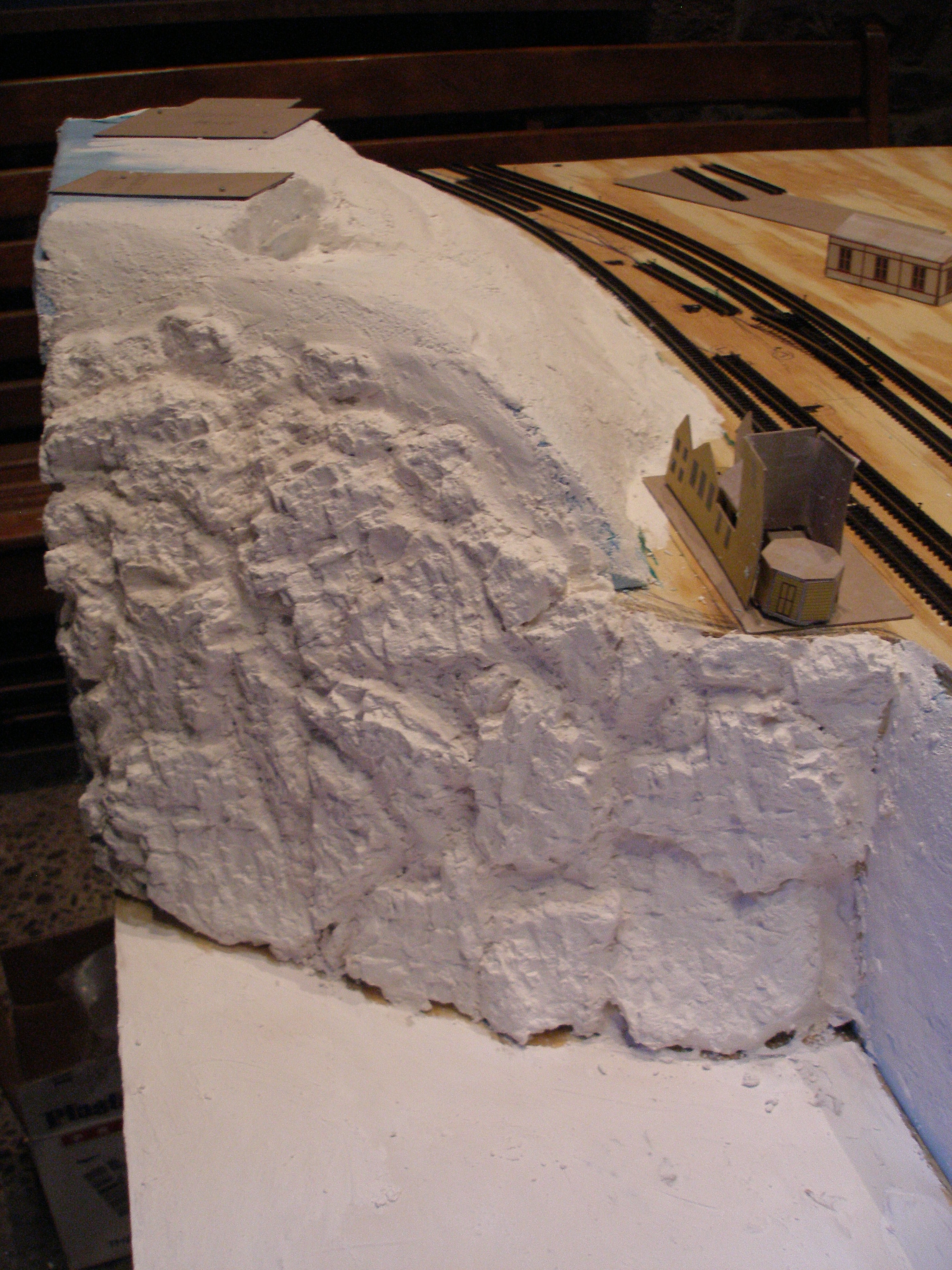
Here you can see the indivial rock pieces have been blended together with plaster. Once dry, it was chipped to blend it all together. In addition, you can see that plaster has been spread over the carved foam hill and the bottom of the pit.
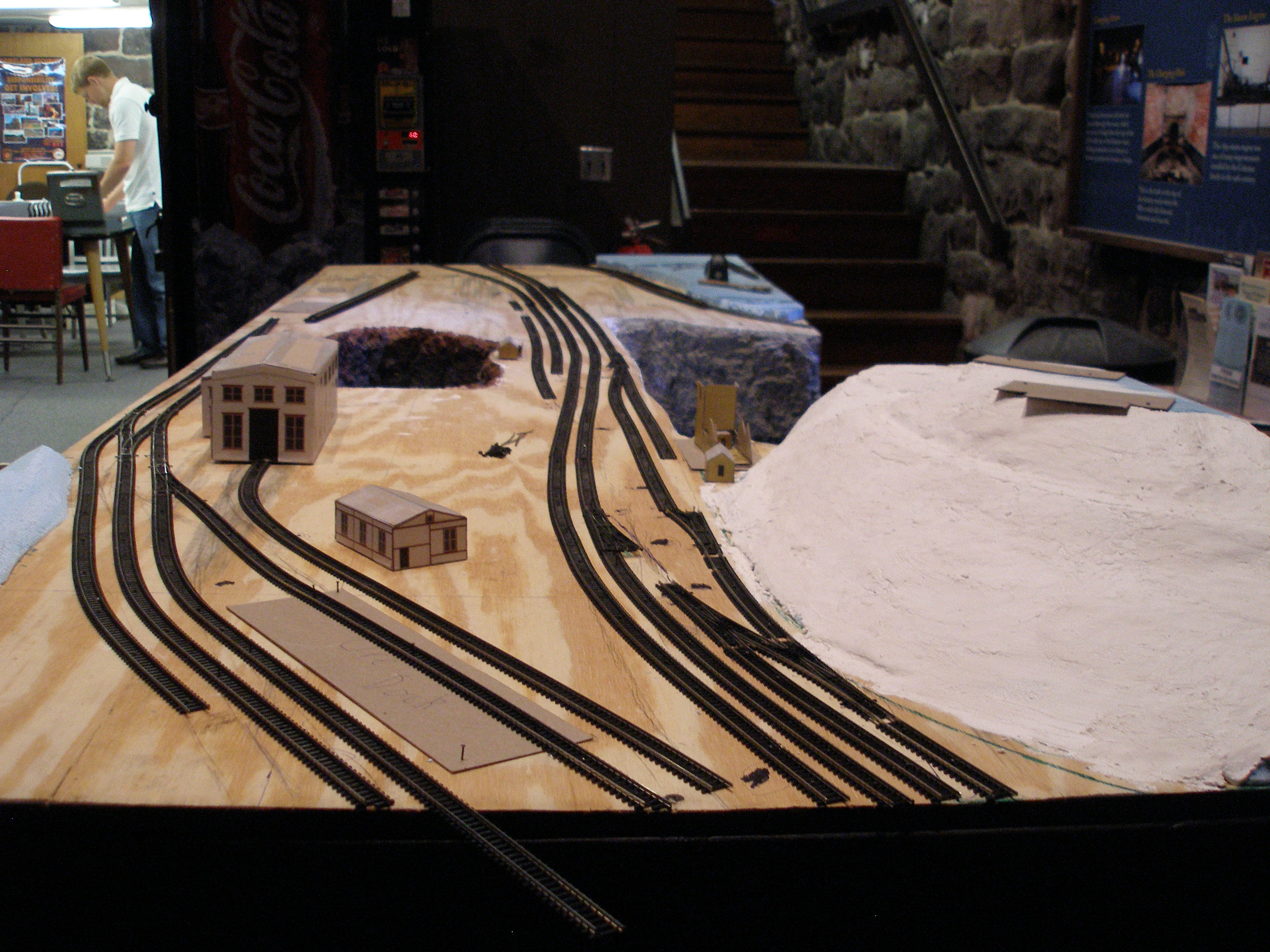
Trackwork and scenery are progressing in this shot. More of the mock up buildings are present. When all said and done, over twenty structures will be present on Phase One alone.

Brandy Watts' artistic help was essential in getting the scenery to look real. Here you can see the hill side and part of the pit with a first layer of paint. A local resident and former miner at the Cornwall Ore Mines, Bill Showers, provided valueable maps, photos, and knowledge esential to accurately depicting the ore mines. Along with taking the author on a short field trip to the flooded ore mines down the street, he helped explain the colorations of different parts of the pit. Here you can see the red colored rock as the overburden with the darker grey color being the iron ore itself. Iron ore is actually this color when intially mined, it is only after time that it weathers to a rusty color.
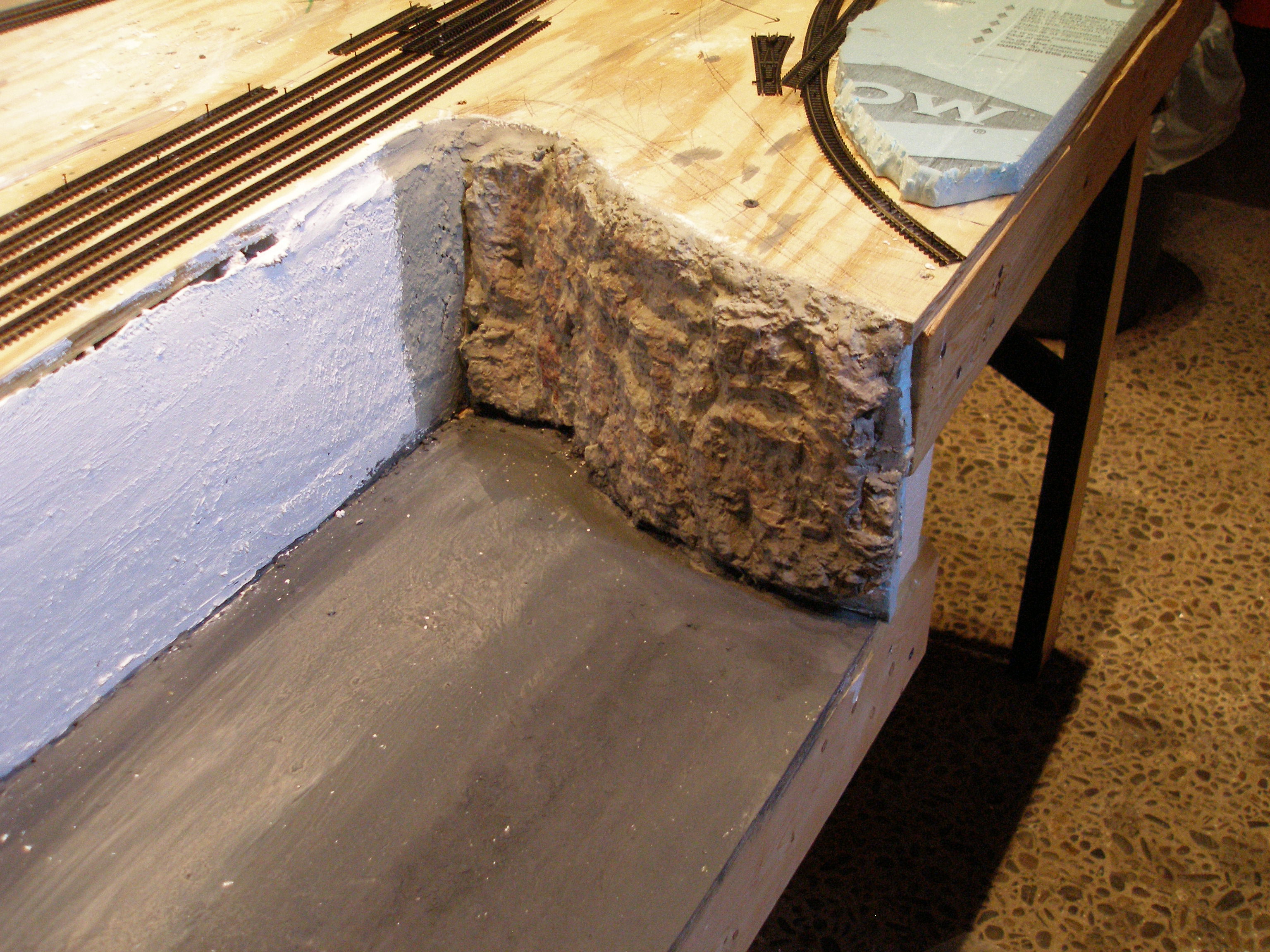
As visible here, the eastern part of the pit contained a section known as "Limestone Ridge" for the limestone it contained.
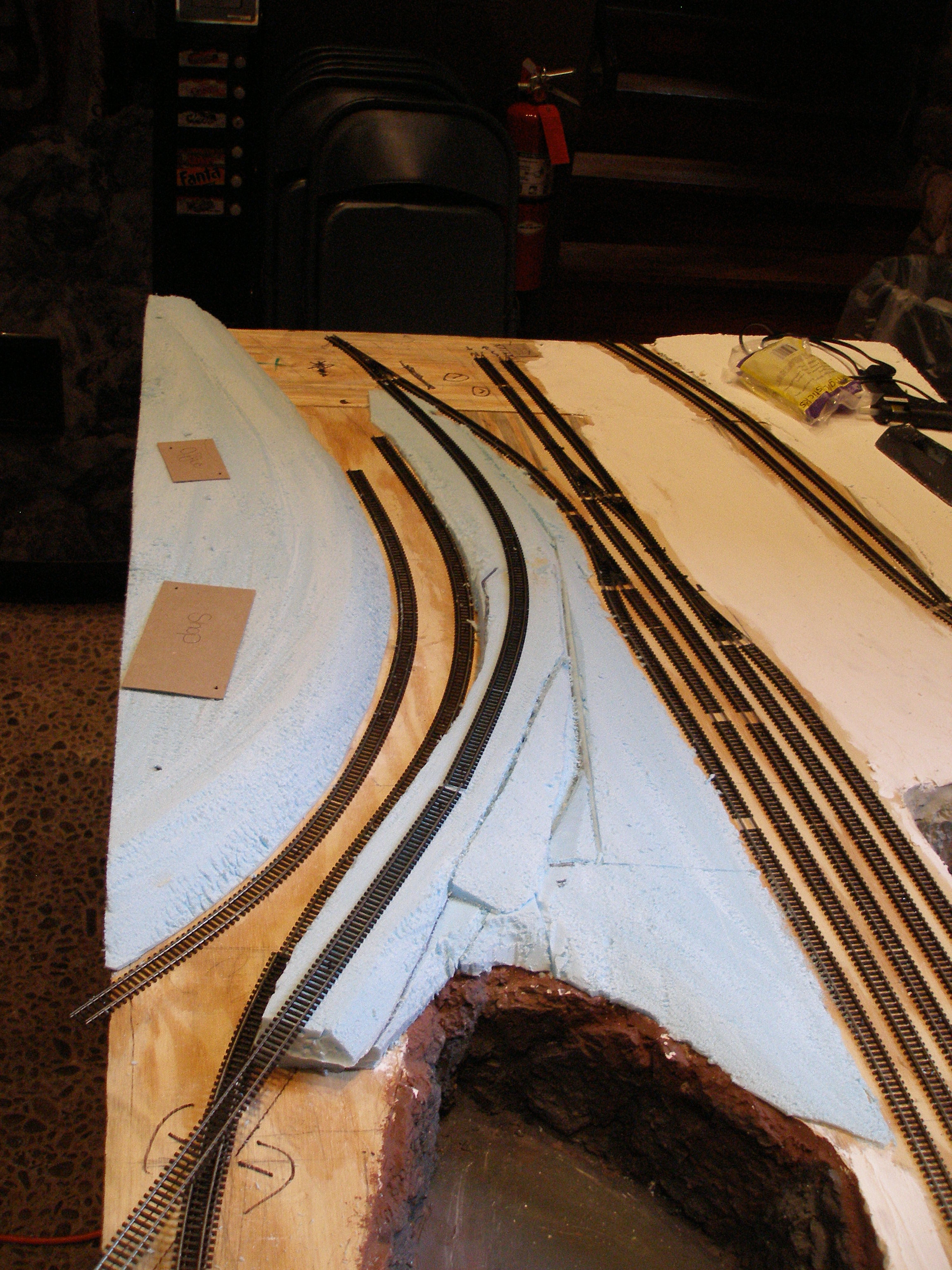
Scenery progresses on the eastern part of the layout. Here you can see the tracks of all three rail operations. On the very top right corner and the track that is farthest to the left are that of the Cornwall Ore Banks. The yard trackage and the line that runs up the hill to the bottom left corner (where a bridge will be built as per the prototype) is the Cornwall Railroad. The Cornwall & Lebanon had their trackage sneak under the Cornwall RR in the bottom left corner of the photo where the bridge will be, to connect in with the Cornwall Ore Banks at the top left. None of this track exists anymore.
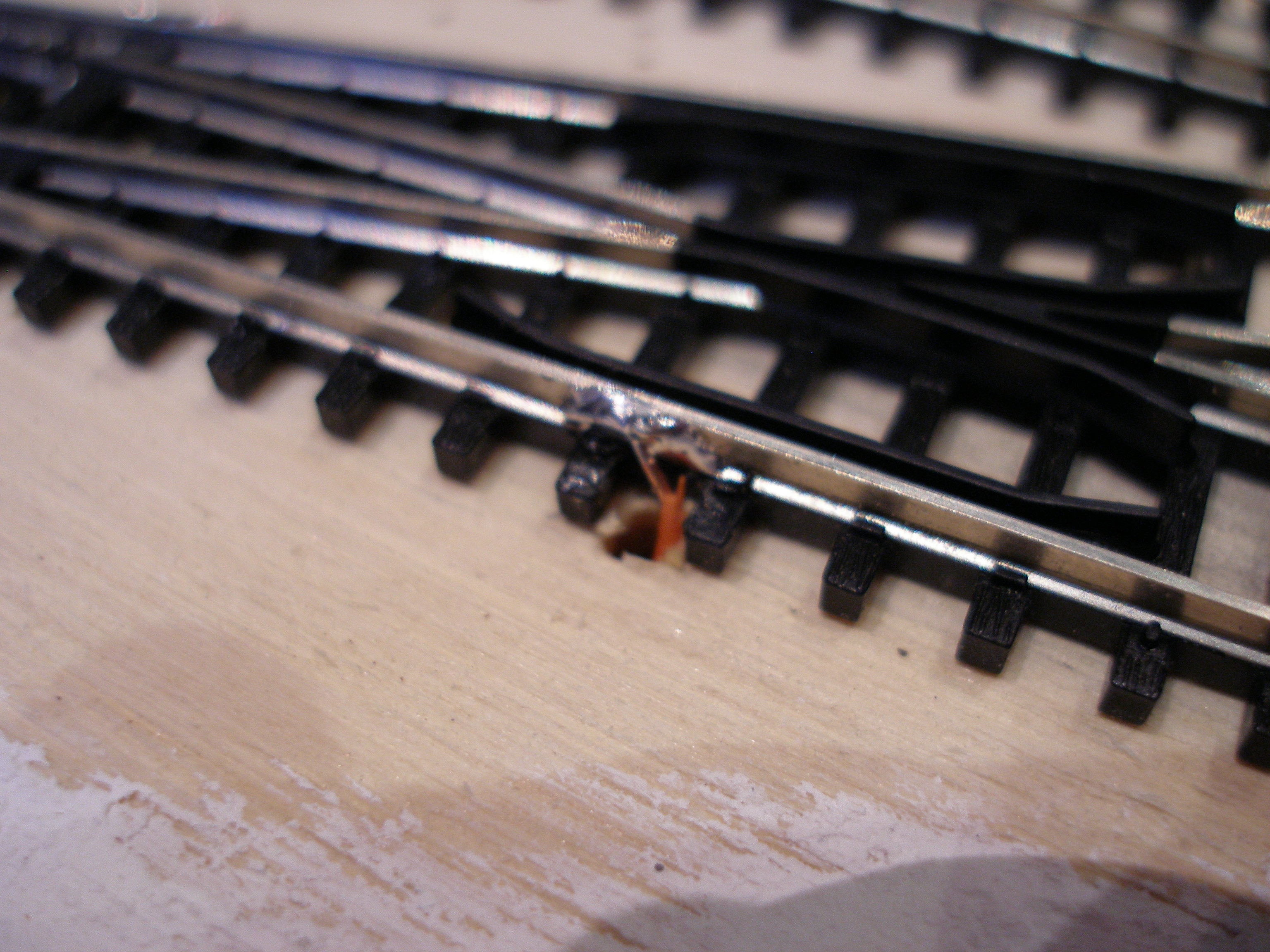
Although it may seem like overkill, every single piece of operating trackage has feeder wires going to it. This helps to insure flawless operation.

The entire layout having had the scenery base carved to shape, has been painted the according ground cover for each section. Scenery followed close behind.
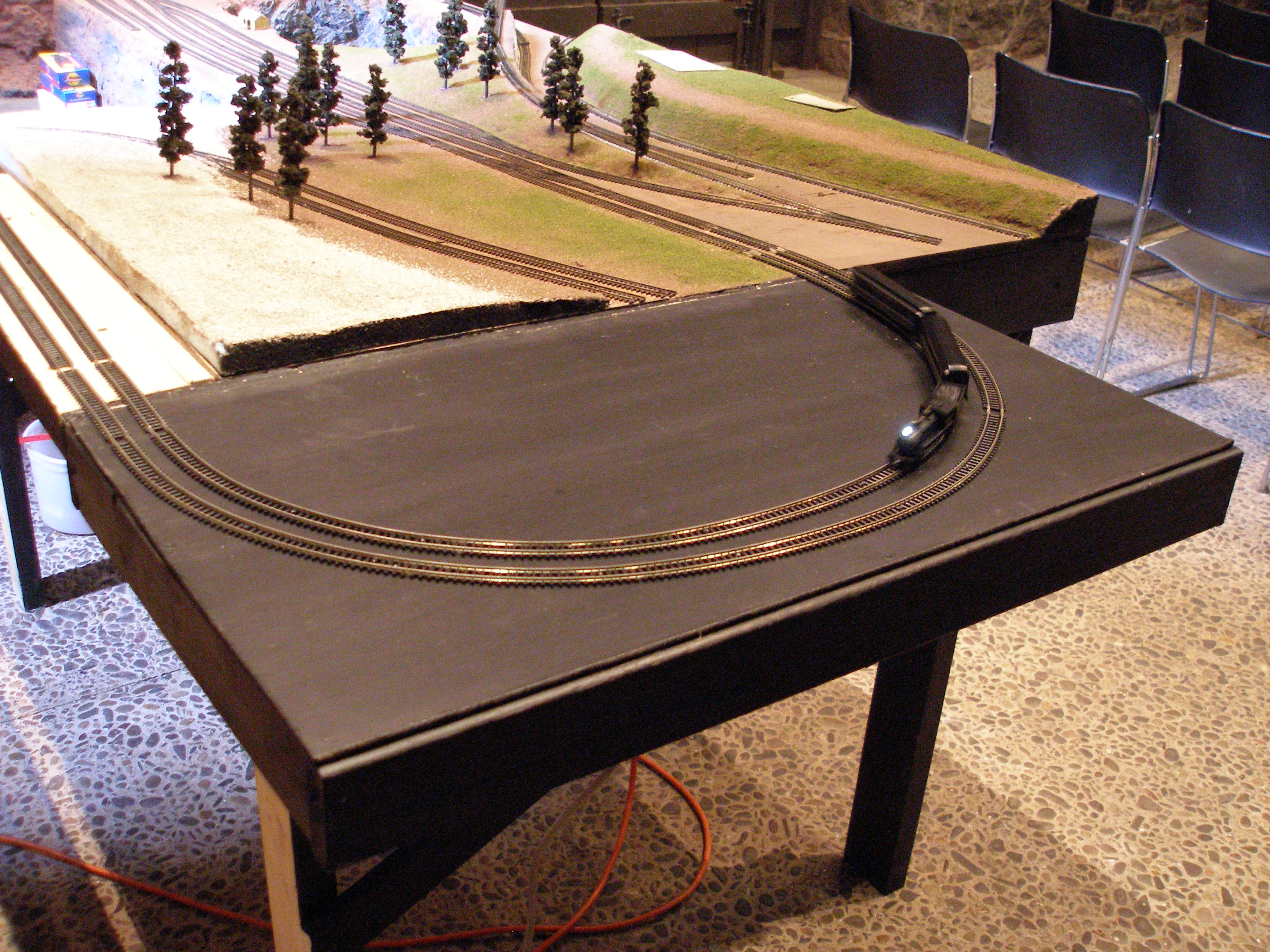
Two trains can run on the Cornwall Railroad trackage - one running on the Southbound main and the other on the Northbound main. Here you can see one of the two turnback curves that take the trains behind the backdrop (not yet mounted in this photo) and to the other side of the layout to provide continuous running. One power pack runs both trains as each mainline is wired with the opposite polarity as the other one to allow one train to travel Northbound and the other Southbound.
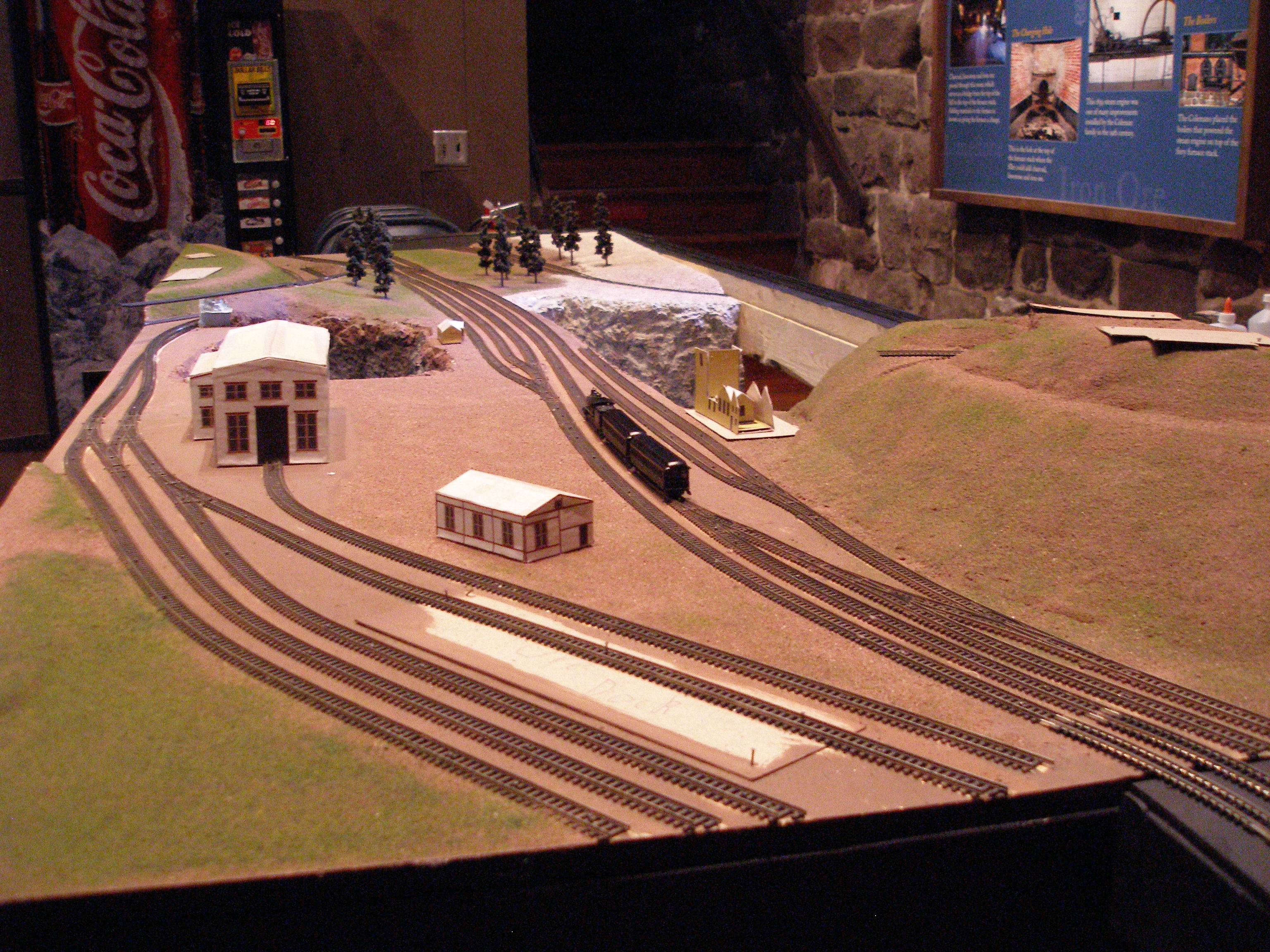
A first layer of scenery has now come to the layout. Historic photos from that time were utilized for correct placement of the trees on the layout.
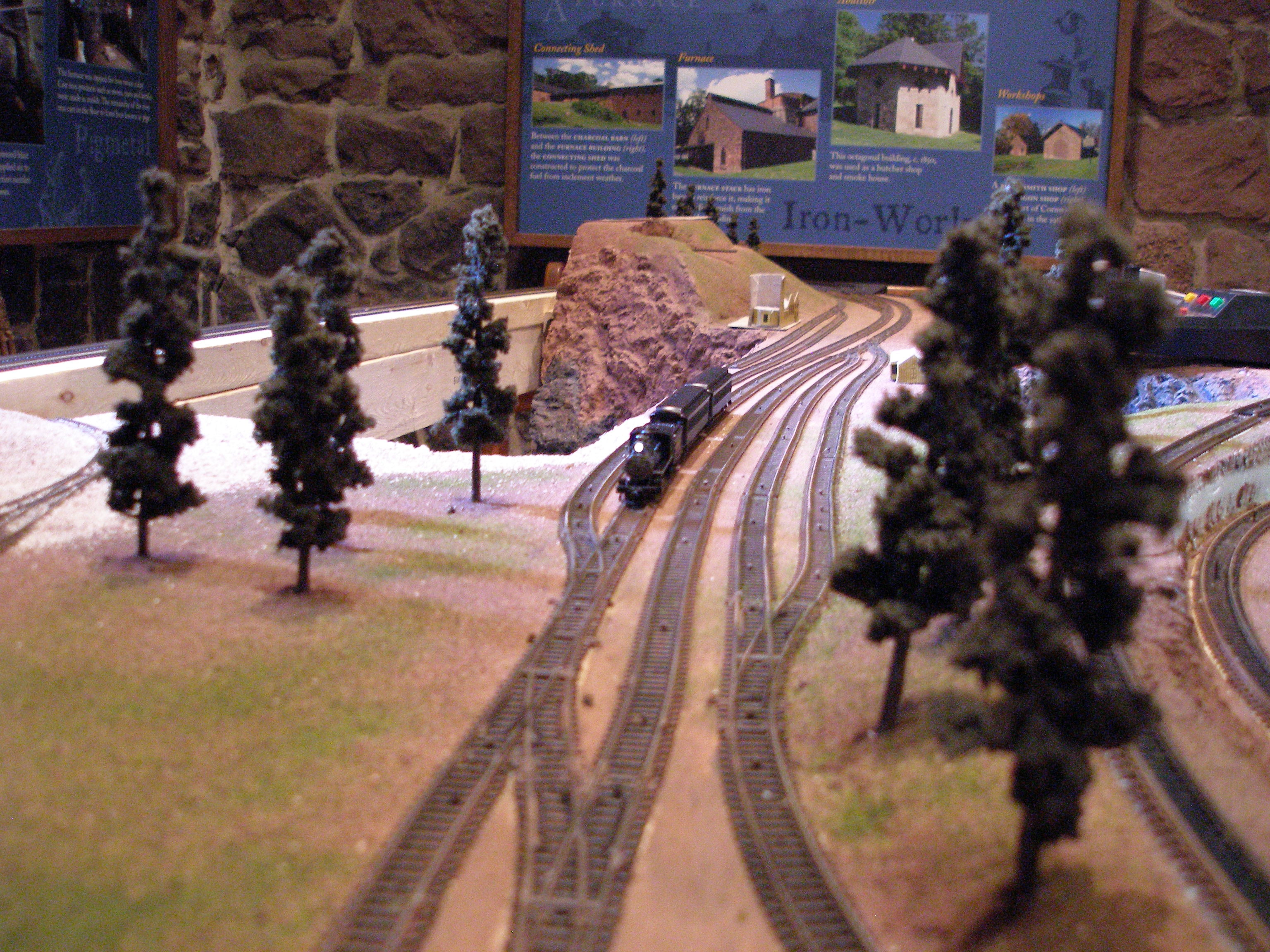
The layout finally comes to life as a Southbound passenger train passes by the open pit. The two locomotives currently on the layout are both old time Athearn 2-8-0's which are very close to the Conrwall Railroad's number 4 and 5. The passenger coaches are also Athearn. All will be lettered accordingly in the future. Frieght cars will end up being a bit of a problem as appropriate ones are not avaliable in N scale. The wooden ore gondolas and hoppers will probably end up being scratch built or made from modified old time flat cars.
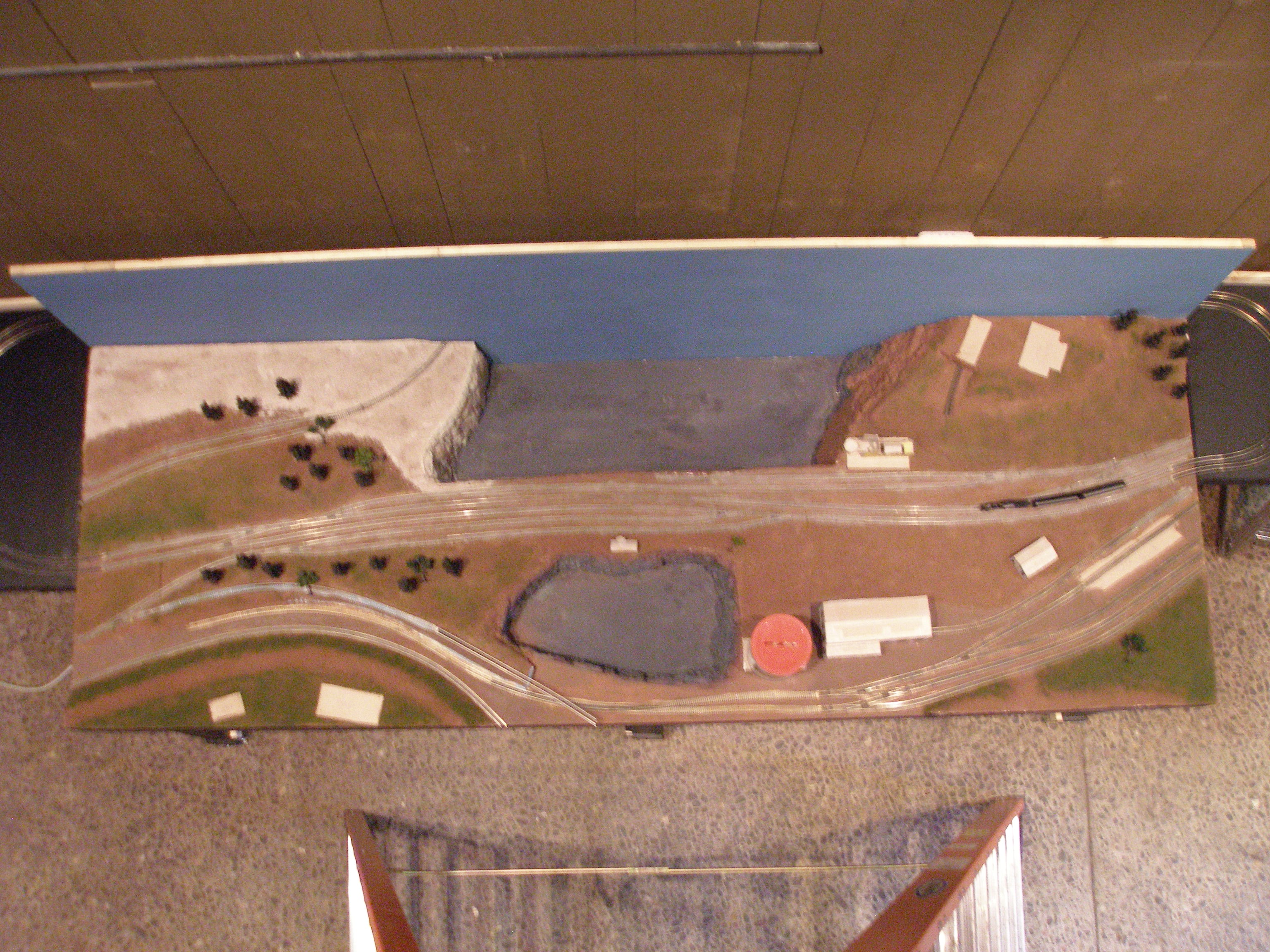
At one point during that summer, the layout was moved against a different wall in the same room construction was started in. Small casters were attached to the benchwork to allow the layout to be moved around easily as needed. The old charcoal barn, which at this time was were the layout was kept in, has very high ceilings with track lighting. Upon moving the layout, the lighting need adjusted which provided an excellent arial photo opportunity.
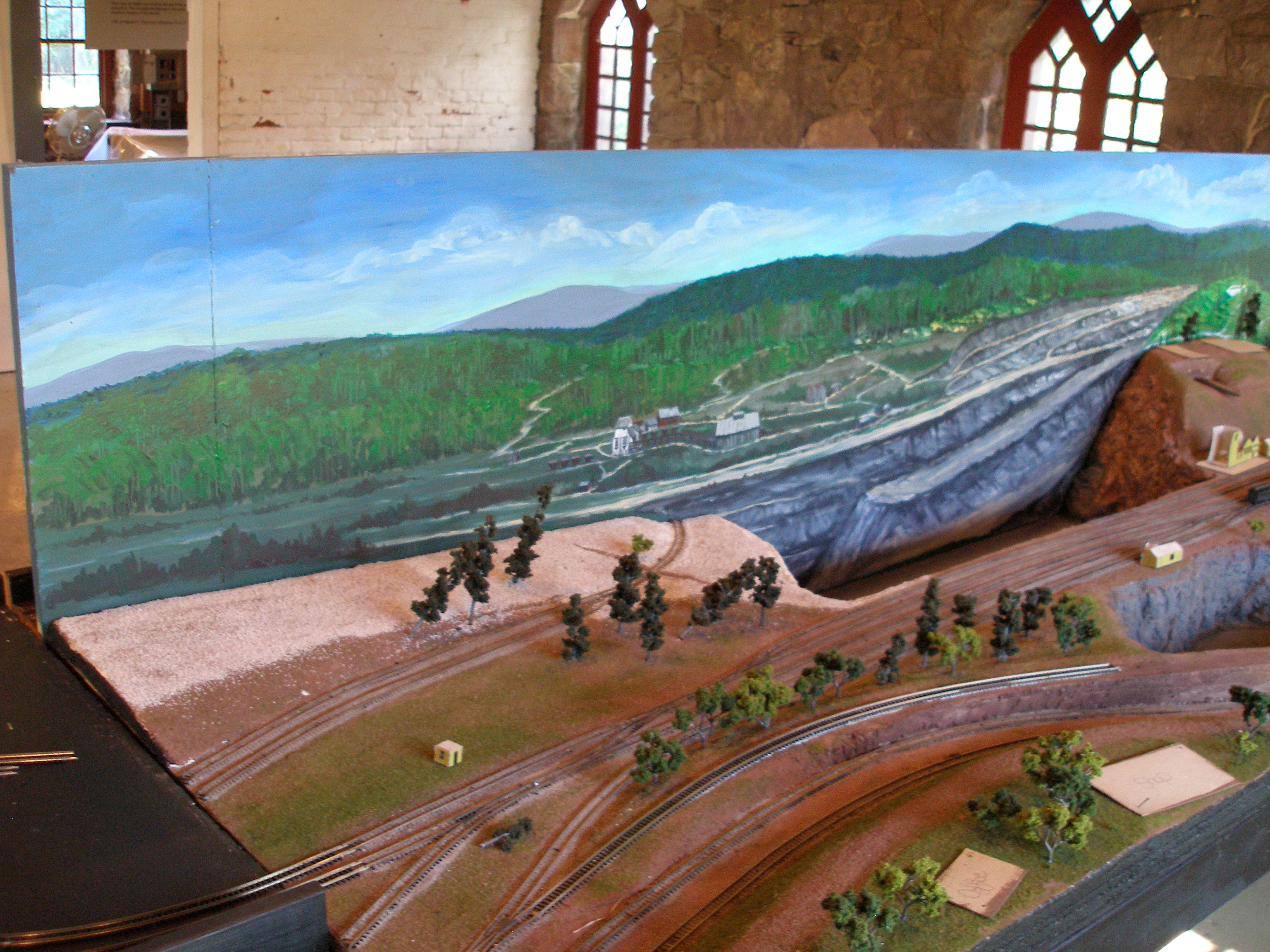
After the summer of 2007, the layout was moved up to the blacksmith shop and its intended home. Much to the dismay of the author, the layout was rolled down the driveway and a couple yards down the road before being picked up and carried the remaining distance into the blacksmith shop. This move was mentioned to the author after the fact as he was away at college at the time! Luckily, even though the layout was never constructed to be moved in such a fashion, it held up very well with only a little damage to the rockwork in the open pit and a little extra bracing being added to remove a little wobble out of the legs of the benchwork. After being moved from the visitor center to the blacksmith shop, the layout was opened periodically but eventually deemed by the staff of the site as too much of a hassel and since then has sat there unfinished. There is a standing agreement with the furnace that the author of this website will complete the layout, including the addition of a new section which includes the furnace itself, if the layout would ever be reopened for use.
This photo above shows the layout at its new home with the addition of a beautifully done and historically accruate backdrop painted by local art teacher and historian Sue Wentzel. Sue very graciously took time out of her busy schedule to painstakingly paint the backdrop accroding to historic photos of the time. Her work was donated free of charge to the project. Now if only the rest of the layout can be finished to match the quality of the backdrop! Sue certainly has set a high bar to match.
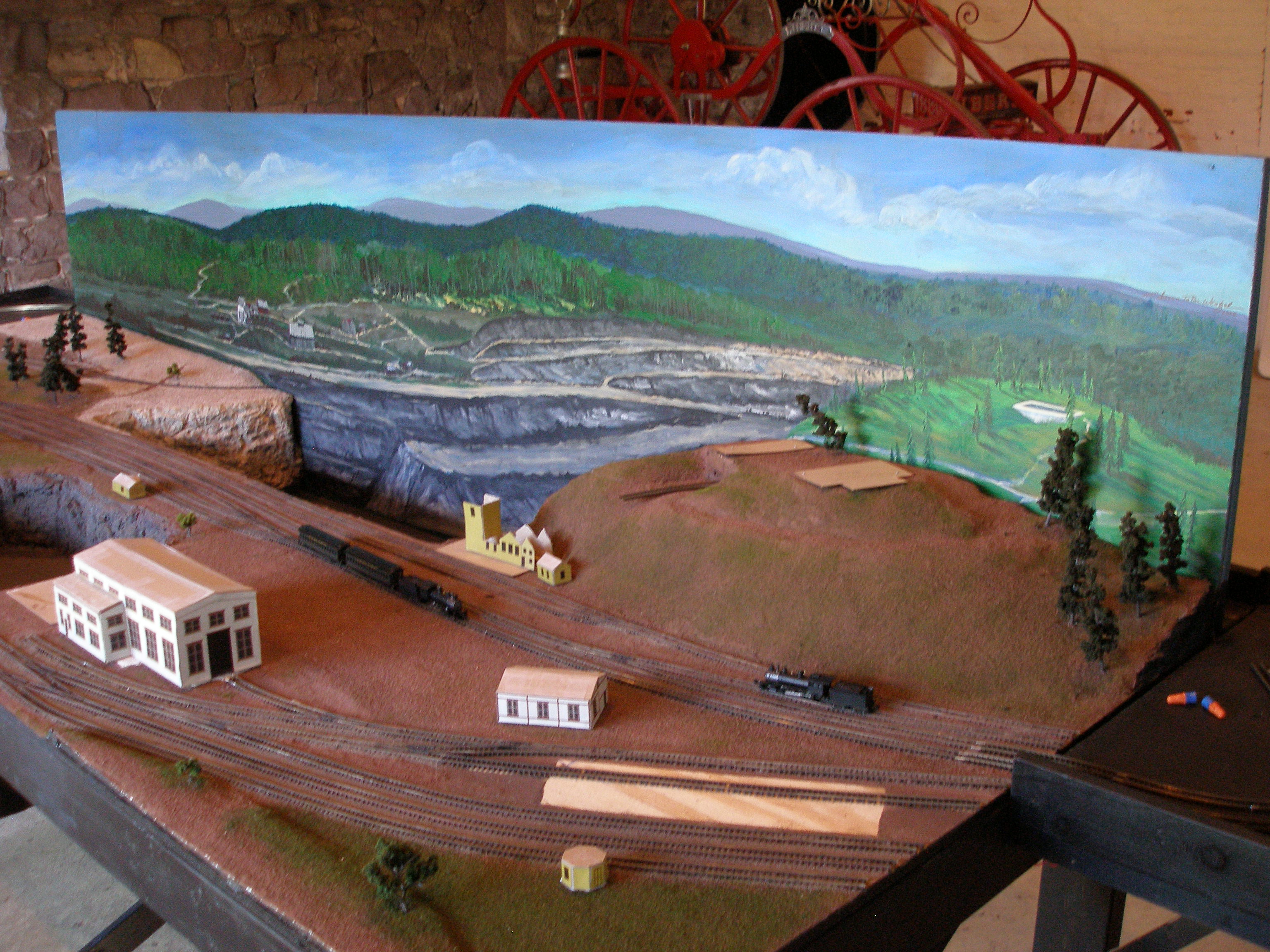
Another view of the layout with the backdrop installed. The scenery is now nearly complete but the daunting task of creating all of the structures remains.
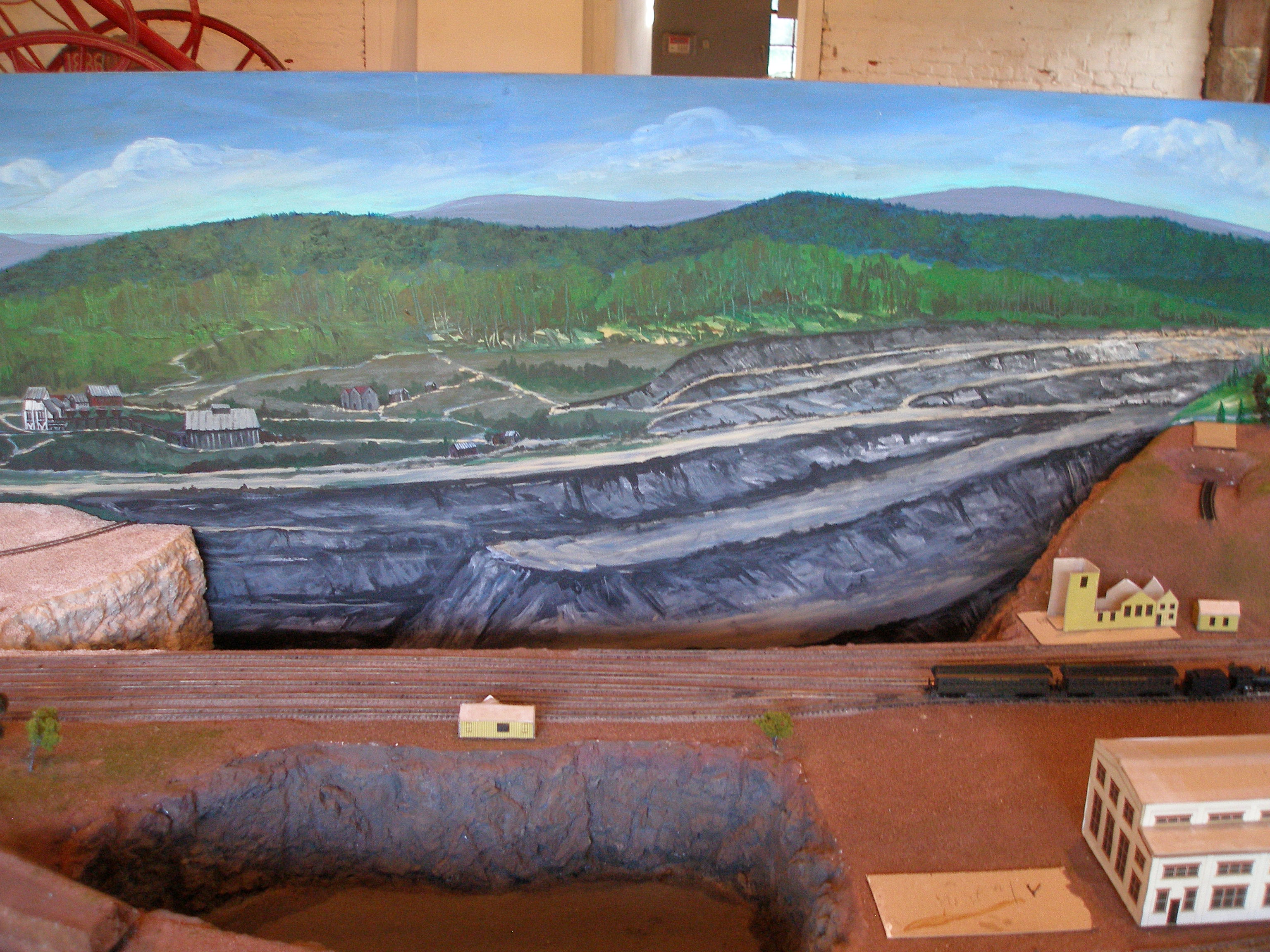
N scale 1912 and real life 1913.